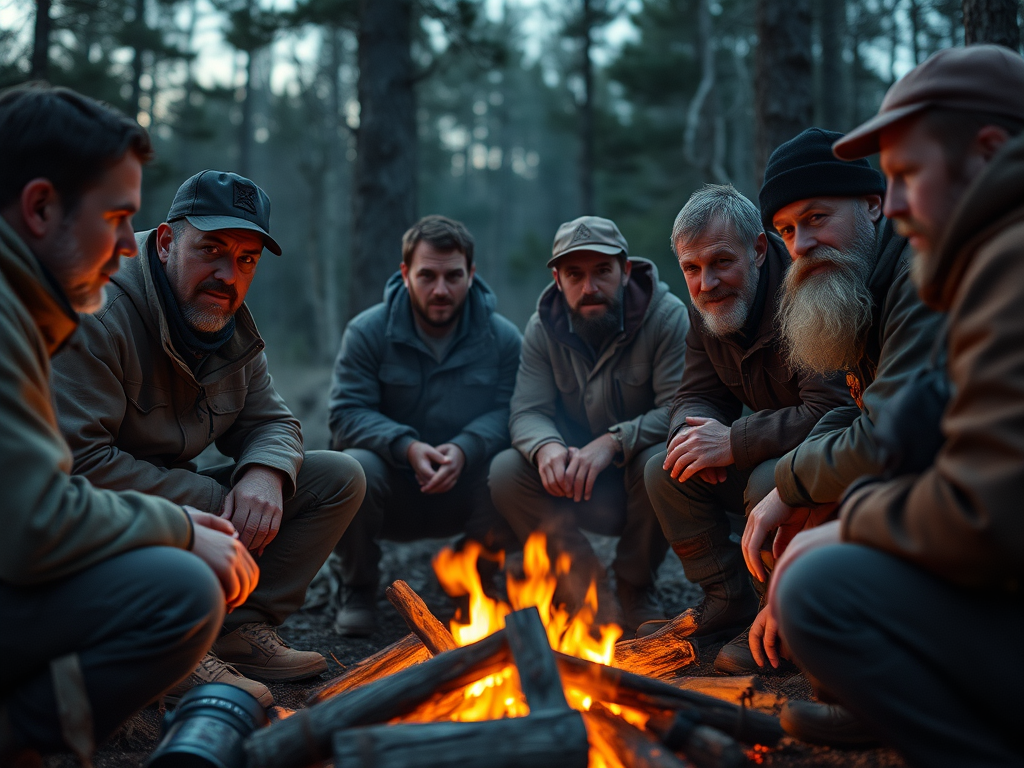
• By Edmund Lizotte, Founder — Valor-Recovery.org


    Shelter Before the Storm — Resilience, Recovery, and the Bushcrafter’s Way


    There is a principle every serious bushcrafter learns — usually the hard way:

    The shelter built well before the storm is worth a hundred built during it.

    I’ve been in the woods when the weather turned fast. One moment, the sky is overcast but manageable. Next, the wind picks up, the temperature drops, and the rain comes sideways. If you haven’t built your shelter yet — if you were waiting until you really needed it — you are now building in the worst possible conditions. Cold hands. Poor visibility. Urgency replacing intention. And urgency, in the woods as in life, is where mistakes happen.

    Recovery is no different.


    The Myth of Crisis-Driven Change

    We live in a culture that romanticizes rock bottom. The idea that a person must hit the lowest possible point before change becomes possible is deeply embedded in the way we talk about addiction — and it is, I believe, one of the most damaging myths in the recovery landscape.

    Not because rock bottom isn’t real. It is. I’ve been there. Many of the veterans I work with have been there. But the idea that we must wait for crisis before we begin building — that resilience is something assembled in the wreckage rather than constructed in the calm — costs people years of their lives. Sometimes it costs them everything.

    The storm will come. It always does. The question is not whether you will face hard days, triggers, grief, loss, or the sudden return of old pain. The question is: what have you built before it arrives?


    What Resilience Actually Is

    Resilience is one of the most used and least understood words in the recovery world.

    It is not toughness. It is not the ability to feel nothing. It is not the veteran who never flinches, never cries, never admits to struggling. That is not resilience — that is suppression wearing a tough face. And suppression, left long enough, becomes the wound that the substance is poured into.

    True resilience — the kind that holds in real storms — is built from specific, practiced skills developed in moments of relative calm. It is the result of deliberate preparation. Just like a well-built shelter.

    In bushcraft, a good shelter requires several elements working together:

    • A sound foundation — built on level, dry ground, away from flood risk
    • Strong framework — poles and structure that can bear weight and pressure
    • Proper insulation — material that holds warmth even when everything outside is cold
    • Orientation — positioned to deflect wind, not receive it

    Resilience in recovery requires exactly the same:

    • A sound foundation — self-knowledge, honesty about your triggers and your history
    • Strong framework — daily practices, routines, and disciplines that hold your life in shape
    • Proper insulation — relationships, community, and purpose that keep the warmth in when the cold comes
    • Orientation — a clear sense of your why, so you know which direction to face when the pressure builds

    None of these are built in a crisis. They are built in the quiet. In the ordinary days. In the mornings, when you choose the journal over the scroll. In the evenings, when you take a walk instead of a drink. In the moments that don’t feel significant — but are.

    Man assembling a circular stone base and arch structure outdoors
    Setting the foundation is the first step in building resilience.

    The Stoic Preparation

    The Stoics had a practice called premeditatio malorum — the premeditation of adversity. Before the storm arrives, the Stoic sits quietly and imagines it. Not to catastrophize. Not to live in fear. But to prepare.

    Marcus Aurelius did this regularly. He would begin his day by acknowledging that he would encounter difficulty — ingratitude, frustration, loss, and his own weakness. And by acknowledging it in advance, he arrived at those moments not surprised and undone, but prepared and grounded.

    This is not pessimism. It is the opposite — the deeply optimistic act of a person who believes they have the capacity to meet what comes if they prepare.

    Seneca wrote: “Let us prepare our minds as if we had come to the very end of life. Let us postpone nothing.”

    That is the bushcrafter’s mindset. Build the shelter now. Sharpen the blade before you need it. Lay the fire before the cold sets in. Postpone nothing that builds your foundation — because the storm does not announce itself with enough warning to start from scratch.


    What Veterans Carry Into Recovery

    Many of the veterans I work with arrive at recovery having spent decades building toughness — and almost no time building resilience.

    Toughness says: push through, don’t feel it, keep moving.
    Resilience says: feel it fully, process it honestly, and keep moving anyway.

    The distinction matters enormously. Because toughness is a finite resource. You can be tough for years — decades, even — and then one day, the thing you have been pushing through pushes back harder than you can manage. And without the foundation of genuine resilience underneath the toughness, the fall is devastating.

    This is the pattern I see repeatedly. Not weakness. Not failure. But a man who built walls instead of foundations — and when the walls finally gave way, there was nothing underneath to stand on.

    Recovery coaching, at its best, is the work of going back and building what was never built. Not in crisis — though we often begin there — but in the steady, deliberate days that follow. Building the practices, the self-knowledge, the community, the purpose that should have been laid down years ago but weren’t, because nobody showed you how, or nobody told you it mattered.

    It matters. It is the whole thing.


    Building in the Calm — Practical Steps

    If you are in a period of relative stability right now — if the storm is not presently overhead — this is your moment. Not to relax your guard, but to build.

    Here is where to start:

    1. Know Your Weather Patterns
    Every person in recovery has predictable triggers — emotional states, situations, times of year, people, places — that precede difficulty. Most people know what theirs are, but have never written them down or made a plan for them. Do that today. In the calm, with clear eyes, map your weather. Know what a storm looks like before it arrives.

    2. Build a Daily Practice
    Resilience is not built in grand gestures. It is built in daily ones. A morning journal. A walk in the woods. Five minutes of Stoic reading. One honest conversation. These are not luxuries — they are the poles and framework of your shelter. Build them now, while the sky is clear, so they are standing when you need them.

    3. Find Your Fire Circle
    Isolation is the enemy of resilience. The research is unambiguous — connection is one of the most powerful protective factors against relapse and against the collapse of mental health under pressure. You do not have to navigate this alone. Find your people. A recovery coach. A Stoic fellowship. A trail partner. Someone who has been in the storm and found their way through. Build that relationship before you are desperate for it.

    4. Develop a Physical Practice in Nature
    Bushcraft, hiking, camping, fire-building — these are not hobbies. Veterans in recovery are receiving neurological medicine. They build competence, presence, and a grounded confidence in the body and the self. Every skill you develop in the woods is a layer of insulation against the cold. Build those skills now. They will hold when the weather turns.

    5. Know Your Why
    Return to this again and again. Why are you in recovery? Why does it matter? Who are you becoming? When the storm arrives — and it will — your why is the orientation of your shelter. It is what determines whether the wind hits you full in the face or passes around you. Know it. Write it down. Revisit it. Tend it like the fire it is.


    The Quiet Moments Are the Most Important Ones

    I want to close with something that took me a long time to understand.

    The dramatic moments — the crisis, the turning point, the decision to get sober, the first day of recovery — those are visible. People see them. They get talked about. They feel significant.

    But the quiet moments are where the real work happens.

    The Tuesday morning when you chose the walk instead of the drink. The Friday evening when you sat with the discomfort instead of spending your way out of it. The Sunday afternoon when you built a fire alone in the woods and sat with yourself long enough to remember who you actually are.

    Those moments don’t feel like much while they’re happening. But they are the poles, the framework, the insulation, and the foundation of everything that holds when the storm comes.

    Build now. Build deliberately. Build in the calm.

    The storm will come — and your shelter will hold. 🌲


    Edmund Lizotte is the founder of Valor Recovery, an internationally certified addiction recovery coach, and a 26-year military veteran. Valor Recovery offers recovery coaching for veterans and first responders, integrating Stoic philosophy, nature-based practice, and a whole-person approach to healing. Learn more at Valor-Recovery.org.


    Contact me at 860-798-1896, ejlizotte@valor-recovery.org

  • By Edmund Lizotte, Founder — Valor-Recovery.org


    There is a line I wrote for our Wednesday Wisdom posts this week that I want to sit with for a moment — not as a social media caption, but as something deeper:

    “The woods do not speak to those who rush through them. Slow down. Be still. The answers you are searching for have been waiting quietly all along.”

    I wrote it quickly, almost casually. But the more I sit with it, the more I realize it is one of the most important things I know — about recovery, about healing, and about what the Stoics were trying to teach us all along.


    The Noise We Carry

    Most of the veterans I work with are not quiet men.

    Not because that is who they are by nature, but because the world they live in has trained them otherwise. The military, first responder work, the culture of service — all of it rewards speed, decisiveness, and constant action. There is no pause button in a combat zone. There is no stillness in an emergency room. There is no margin for hesitation in a crisis.

    So we don’t develop that muscle. We develop the opposite one.

    And then one day — the service ends. The mission shifts. The uniform comes off. And suddenly, the noise you were trained to run toward is everywhere, all the time, and there is no clear direction to run in.

    So many veterans I speak with describe exactly this feeling—a kind of restlessness with no target. An inability to sit still. A compulsion to keep moving, keep doing, keep consuming, keep something.

    Sound familiar?


    What Stillness Is — and What It Is Not

    Stillness is not passivity. It is not avoidance. It is not the absence of action.

    Stillness is presence — and presence is one of the most disciplined things a human being can practice.

    In bushcraft, you learn this quickly. You cannot rush a fire-start. You cannot force a shelter to hold in wind if you haven’t taken the time to read the terrain, assess the wind direction, and place it correctly. The woods do not negotiate in a hurry. They respond only to attention.

    The same is true of recovery.

    The answers you are searching for — the clarity about who you are, what you want, what went wrong, what comes next — are not found in the next drink, the next purchase, the next distraction, the next scroll. They are found in the spaces between those things. In the pause. In the breath. In the moment when you stop running long enough to ask a single honest question and wait for the answer to rise.

    Marcus Aurelius wrote this in Meditations: “Go into yourself. There you will find the wellspring of good — always there, if you will keep digging.”

    The wellspring was always there. We just stopped digging long enough to listen.


    What Science Says About Stillness

    This is not just philosophy. It is physiology.

    Research on nature-based interventions for veterans with PTSD has found that time in natural environments — particularly when it involves deliberate, focused activity — significantly reduces PTSD symptoms, lowers cortisol, and improves emotional regulation. The mechanism is not mystical. It is neurological.

    Natural environments engage the brain’s soft fascination — a state of gentle, effortless attention that allows the overactive threat-detection systems to rest. For a brain that has spent years in hypervigilance — whether from combat, first responder trauma, or the constant self-monitoring of addiction — this is not a luxury. It is a neurological necessity.

    But here is the critical part that most people miss: it requires stillness. Simply being in nature is not enough. Walking through the woods while your mind is racing through emails, regrets, and tomorrow’s to-do list is functionally the same as being at your desk. The body is outside. The mind is still in the noise.

    The healing begins when you stop. When you sit. When you actually attend to what is in front of you — the sound of the wind, the texture of bark, the warmth of a fire, the weight of your own breath.

    That is when the woods begin to speak.


    Man sitting by campfire with river and snow-capped mountains
    Stillness enables one to be at one with one’s surroundings and find inner peace.

    Stillness as a Stoic Practice

    The Stoics understood stillness not as withdrawal from the world, but as a discipline of inner clarity that made action in the world more effective, more virtuous, and more aligned.

    Epictetus taught that the space between an event and your response to it is where your freedom lives. That space is stillness. It is the pause between stimulus and reaction — and it is the most practiced skill of any recovering person, because every relapse, every impulsive decision, every moment of self-sabotage begins in the absence of that pause.

    Stillness is not the opposite of action. It is the prerequisite for right action.

    Seneca wrote: “If you do not know what harbor you seek, no wind is favorable.”

    That is what most of us have been missing. Not more effort. Not more speed. Not more discipline. A harbor. A direction. And stillness is the only way we find it.


    How to Practice Stillness — When Stillness Feels Impossible

    If you are reading this and thinking, “I can’t sit still,” I want you to know that you are not broken. You are reacting exactly as someone who has spent years in a high-stimulus environment would. Stillness feels foreign because you haven’t been given the chance to build it.

    Here is where to start — not with an hour of meditation. With one minute.

    1. One Minute in the Woods
    Go outside. Sit on the ground. Set a timer for 60 seconds. Do nothing but breathe and notice. The texture of the ground beneath you. The quality of the light. The sound of the air moving. That is it. One minute. Every day. Build from there.

    2. The Fire-Building Practice
    When you build a fire — and you should do so regularly — do it slowly. Do not rush to the flame. Feel the wood. Read the conditions. Arrange the tinder with intention. Make each strike of the ferro rod a moment of total attention. The fire is not the goal. The focus is.

    3. The Stoic Pause
    When an impulse rises — to spend, to drink, to react, to escape — pause. Not for long. Just long enough to ask: “Is this an act of reason, or an act of avoidance?” One breath. One question. That is stillness. And it is enough to change everything.

    4. The Walking Meditation
    Walk a familiar trail — slowly, without headphones, without a destination. Let your eyes rest on the path ahead, not on the phone in your pocket. When your mind drifts — and it will — gently return your attention to your feet on the ground. Step by step. This is moving meditation, and it is one of the most accessible forms of stillness for people who find seated practice difficult.


    The Answers Have Been Waiting

    I want to come back to the original thought, because I think it carries something important for anyone who has been searching for direction, for peace, for the person they used to be before the substance took over, before the service ended, before the loss changed everything.

    “The answers you are searching for have been waiting quietly all along.”

    They have not been lost. They have been drowned out — by noise, by speed, by the constant demand to move before you are ready, to decide before you have clarity, to survive before you have had a chance to heal.

    Stillness is not about escaping your life. It is about returning to it — fully, deliberately, and with your own two feet on the ground.

    The woods know this. The Stoics knew this. And I believe — deeply — that recovery, at its best, is nothing more and nothing less than the long, honest, patient return to a life lived with attention.

    Slow down today. Be still.

    The answers are waiting. 🌲


    Edmund Lizotte is the founder of Valor Recovery, an internationally certified addiction recovery coach, and a 26-year military veteran. Valor-Recovery.org offers recovery coaching for veterans and first responders, integrating Stoic philosophy, nature-based practice, and a whole-person approach to healing. Learn more at Valor-Recovery.org.

  • “You are not a finished product. You are a work in progress — shaped by every storm you’ve survived, every fire you’ve built, every morning you chose to try again.”
    — Valor-Recovery.org


    New week. New opportunity to become a little more of who you were always meant to be.

    But let’s sit with that for a moment — who you were always meant to be.

    The Stoics understood something that recovery teaches us every single day: you are not defined by where you stand right now. You are defined by the direction you are walking.

    Marcus Aurelius, writing not for an audience but for himself, reminded his own soul: “Confine yourself to the present.” Not to the regret of yesterday. Not to fear tomorrow. But to the next step — this step — the only one that actually exists beneath your feet.


    Every Storm Was Forging You

    Think about every hard thing you have ever walked through. Every loss. Every relapse. Every morning, you weren’t sure you had the strength to get up. The Stoics would not call those accidents. They would call them material — raw material for the person you are becoming.

    Epictetus, born a slave and one of the greatest philosophical minds of his era, understood suffering as a forge. He wrote: “It’s not what happens to you, but how you react to it that matters.” Every encounter, every difficult season, every person who challenged or wounded you — all of it was shaping the iron of your character.


    Amor Fati — Love What Is

    The Stoics gave us one of the most radical and liberating ideas in all of philosophy: Amor Fati — love of fate. Not merely accepting what happens to you. Not tolerating it. But embracing it — recognizing that everything that has come into your life arrived for you, not against you.

    Friedrich Nietzsche, who drew deeply from Stoic wells, described it this way: “My formula for greatness in a human being is amor fati: that one wants nothing to be different.” In recovery, this is transformative. It means the addiction, the rock bottom, the losses — none of it was wasted. It was all curriculum. It was all carving away what you were not, to reveal what you truly are.


    You Are Not Where You Were

    Here is the truth that recovery teaches and Stoicism confirms: the person you are becoming was always inside you. The journey does not create that person from nothing — it uncovers them. Every step on a wooded trail changes the view. Every hard conversation in a recovery room changes your capacity for honesty. Every morning you rise before dawn and choose again is one more layer of the man you were destined to become.

    Marcus Aurelius wrote: “Waste no more time arguing about what a good man should be. Be one.”

    Not tomorrow. Not when things get easier. Now. In this moment. With this step.

    🔥 This week, I want to ask you one question:
    What is one step — just one — you can take today toward becoming the person you know you are inside?
    If you need support finding that answer, Valor-Recovery.org is here to help. Reach out at Valor-Recovery.org — because your story isn’t over. It’s just getting to the good part. Contact us @ ejlizotte@valor-recovery.org, 860-798-1896.


    🌲 New week. New opportunity. Keep becoming. 🔥

    #ValorRecovery #MondayMotivation #Becoming #AmorFati #Stoicism #RecoveryCoaching #VeteranRecovery #NewWeek

  • Sunday Reflection from Valor-Recovery.org🌲

    “Grief is not a weakness. It is the weight of love with nowhere left to go. Honor it. Carry it with dignity. And know that healing does not mean forgetting — it means learning to walk forward with what you carry.”

    — Valor-Recovery.org

    Many of us in recovery carry grief we were never given permission to feel. The loss of a parent. A fellow soldier. A version of ourselves we thought was gone forever. For some, that grief became the wound that the substance was poured into — not out of weakness, but out of a very human need to survive the unbearable.

    The Stoics did not ask us to be unmoved. Marcus Aurelius grieved deeply and openly. What Stoicism asks is that we not be consumed — that we feel fully, and then return to the work of living with intention and dignity.

    If you are carrying grief today, you are not alone. You never were. Allow yourself to feel it, name it, and know that it does not have to define your path forward. It can, in time, become part of what makes you stronger, wiser, and more compassionate toward others who are still finding their way.

    That is the trail. And you are on it. 🌲

    #ValorRecovery #SundayReflection #Grief #Healing #RecoveryCoaching #VeteranRecovery #Stoicism #YouAreNotLost #NotBroken

  • Flowing stream with large rock and autumn trees in forest
    Resilience – continuing to move ever forward, even in the face of an immovable object. – Valor-Recovery.org

    “The river does not stop because a boulder blocks its path. It finds a way around, under, or through. Recovery is the river. Keep moving.”

    — Valor-Recovery.org

    Some days, the boulder feels immovable. It isn’t. You are water — persistent, patient, unstoppable when you keep flowing.

    Keep moving today. The path will open.

    #ValorRecoveryorg #ThursdayThoughts #Resilience #RecoveryCoaching #VeteranRecovery #Stoicism #YouAreNotLost

  • “The Stoic does not wait for the perfect moment. The bushcrafter does not wait for dry wood. The man in recovery does not wait to feel ready. They begin. Right now. With what they have.”

    — Valor-Recovery.org

    There is no perfect day to start. No ideal conditions. No moment when everything lines up just right.

    There is only now. And now is enough.

    Whatever you’ve been waiting to begin — today is the day. Start where you are. Use what you have. Become who you are meant to be.

    #ValorRecovery #ThursdayThoughts #RecoveryCoaching #Stoicism #Bushcraft #VeteranRecovery #YouAreNotLost #JustBegin #NotBroken #OneStepAtATime

  • “The skilled bushcrafter does not curse the wet wood or the cold wind. He works with what is. Recovery asks the same — not that life be easy, but that you become equal to it.”

    — Valor-Recovery.org

    Some days the wood is wet. Some days the wind cuts right through you. Recovery doesn’t promise you calm weather — it builds in you the kind of person who can make fire anyway.

    Whatever you’re facing today — work with what is. You are more capable than you know.

    #ValorRecovery #WednesdayWisdom #RecoveryCoaching #Stoicism #Bushcraft #VeteranRecovery #YouAreNotLost #Resilience #NotBroken

  • By Edmund Lizotte, Founder — Valor-Recovery.org


    I want to say something to you before we go any further — something I wish someone had said to me a long time ago:

    You are not broken.

    You are not a label. You are not condemned by your past or defined by the substance you’ve been using to get through the day. You are a human being who, somewhere along the way, lost sight of who you were — and found something that helped you forget, at least for a while, that you were lost.

    I know, because I’ve been there.

    I’m a 26-year military veteran. I’m a recovery coach. And I’m a man in recovery from alcohol use. I was raised by an alcoholic father, and I lost my mother when I was twelve years old. At thirteen, I was sexually abused. I didn’t have the words for it then, and for decades I didn’t speak it aloud. But it lived in me — quietly shaping the way I saw myself, the way I numbed myself, the years I lost not knowing why I felt so broken inside.

    What I eventually came to understand — through hard years, honest reflection, and the study of Stoic philosophy — is that I wasn’t drinking because I was weak or broken. I was drinking because something essential was missing, and I hadn’t yet found a healthier way to fill that space.

    That insight changed everything for me. And it is the foundation upon which Valor-Recovery.org is built.


    You’re Not Using — You’re Searching

    The science supports what many of us have felt in our bones. Psychologist Bruce Alexander’s landmark Rat Park research demonstrated that isolated, disconnected beings — human or otherwise — are far more likely to rely on substances than those living in rich, connected, purposeful environments. His conclusion was direct: addiction is not a moral failure. It is, most often, a response to dislocation — to being cut off from meaning, belonging, and identity.

    For veterans, that dislocation can be profound. You spent years — sometimes decades — with a clear mission, a defined identity, brothers and sisters beside you, and a purpose larger than yourself. Then one day, that life ended. And no one handed you a map for what came next.

    So you adapted. You found something that helped you cope. Something that numbed the noise, quieted the memories, or simply made the day bearable.

    That is not weakness. That is a human being doing what human beings do — searching for relief from pain.


    Recovery Is Not a Prescription. It Is a Rediscovery.

    I do not believe there is one pathway to recovery that works for everyone. The research confirms this — recovery is deeply personal, shaped by identity, experience, and individual need. What works for one person may do nothing for another. And yet, so much of the traditional recovery landscape operates as though there is a single road, and those who can’t stay on it have only themselves to blame.

    I’ve seen too many veterans walk away from treatment feeling more broken than when they arrived, because the model they were handed didn’t fit the person they actually were.

    Recovery coaching is different. A recovery coach doesn’t diagnose you, prescribe a path, or define your ceiling. A recovery coach walks alongside you — helping you rediscover who you were before the substance took hold, clarify what you truly want, and build a life that no longer needs the substance to feel bearable. The goal isn’t sobriety as an endpoint. It is a self-directed life — one you chose, built, and own.

    For those who love someone struggling — a spouse, a child, a parent, a battle buddy — know this: the person you are worried about is not gone. They are obscured. The work of recovery is not creating someone new. It is clearing the path back to who they always were.


    Stoicism: The Philosophy That Builds the Self

    One of the tools I bring to recovery coaching — and to my own daily life — is Stoic philosophy. Not as an abstract intellectual exercise, but as a living, practical framework for building the person you want to become.

    Stoicism teaches that we cannot control what happens to us — but we have complete dominion over how we respond. It teaches self-awareness without self-condemnation. It asks us to identify what we truly value, strip away what doesn’t serve us, and act with intention rather than impulse. For a veteran navigating the chaos of post-service life, these are not just philosophical ideas — they are survival tools.

    Marcus Aurelius, writing not as a public figure but in private journals never meant for anyone else, returned again and again to a single discipline: know yourself, govern yourself, build yourself. That is recovery. Not the recovery of a label or a program — the recovery of a self.

    Stoicism also helped me understand the impulsive behaviors that followed me into sobriety — the spending, the restlessness, the searching. When we pursue external things to fill an internal void, Stoicism calls that out clearly: it is a category error. Peace does not live in the purchase. It lives in alignment — between who you are and how you live.


    The Woods as Medicine

    There is one more tool in the Valor-Recovery.org framework that I want to speak to directly — and it is one that many veterans already understand instinctively:

    Nature heals.

    Multiple peer-reviewed studies confirm what veterans have long known in their bodies — that time in natural environments reduces PTSD symptoms, lowers stress, improves mood, and helps people reconnect with themselves. Veterans who participated in nature-based programs reported finding “inner peace and reflection,” and described nature as “a place where you are accepted just the way you are.”

    Bushcraft — the practical art of living in and with the natural world — takes this further. It demands presence. You cannot spiral into rumination while you are building a fire with wet wood, reading a trail, or rigging a shelter. Bushcraft requires attention, patience, and competence. And in building those skills, you build something else: a quiet, grounded confidence in yourself that no substance can replicate and no setback can take away.

    For veterans especially, bushcraft reconnects the hands, the mind, and the mission in a way that civilian life often fails to provide. It is purposeful. It is earned. And it is deeply, authentically yours.

    I have spent many hours alone in the woods. That silence — the sound of wind through trees, the smell of earth, the simple demand of a task in front of you — has done more for my healing than I can adequately put into words. It is where I am most fully myself. And I believe it can be that place for you, too.


    A Trail Few Have Traveled

    I’ll leave you with something I’ve been sitting with lately. There’s a well-known saying: “Not all who wander are lost.”

    But I want to offer you something more personal — something I’ve come to believe about my own journey, and about the veterans I am privileged to walk alongside:

    I am not wandering the woods — I am traveling the trail few have dared, to find and build the best version of myself.

    That is what Valor-Recovery.org is about. Not a program. Not a prescription. Not a label.

    A trail. Your trail. And the support of a coach who has walked some of it himself — who has carried the weight of early loss, abuse, decades of numbing, and the long, honest work of finding his way back — and who believes, without reservation, that you have everything in you to do the same.

    You are not lost.

    You just need a different kind of guide.


    Edmund Lizotte is the founder of Valor-Recovery.org, an internationally certified addiction recovery coach, and a 26-year military veteran. Valor-Recovery.org offers recovery coaching for veterans and first responders, integrating Stoic philosophy, nature-based practice, and a whole-person approach to healing.

    Veteran hiking on mountain trail with forest, mountains, and eagle at sunset
    Traveling the path of rediscovery

  • For many veterans, the path back from the invisible wounds of service is not a straight line. Post-traumatic stress, depression, and substance use take time to resolve. Additionally, the loss of identity that can come with leaving military life does not happen on a fixed timeline. Traditional clinic-based care, while valuable, does not always reach those who need it most. Recovery coaching offers something different. It provides a sustained, strengths-based relationship. This relationship walks alongside veterans as they rebuild purposeful, healthy, and connected lives.

    A growing body of research supports coaching and peer-based support as meaningful contributors to veteran recovery. Programs like Valor-Recovery’s, which weave recovery coaching into an outdoor, bushcraft-oriented model, show exactly what this evidence recommends.

    What Recovery Coaching Is — and Isn’t

    Recovery coaching is a non-clinical, person-centered service. A trained guide, often someone with lived experience of recovery, helps individuals clarify goals. They also navigate barriers and stay accountable to the daily practices that support lasting change (Better Life Partners, 2025). Coaches do not diagnose or treat mental illness. Instead, they focus on practical support, future-oriented planning, and connecting veterans with the community resources and clinical care they need.

    This distinction matters. Many veterans hesitate to enter formal mental health systems. They may face issues of stigma, past negative experiences, or a culture that prizes self-reliance. A recovery coach speaks the language of mission, accountability, and earned trust. They meet veterans where they are, not where a system expects them to be (National Veterans’ Training Institute, 2025).

    What the Research Shows

    Coaching Builds Hope, Self-Management, and Resilience

    A quality improvement project in a recovery-oriented mental health setting found that after completing coaching-style recovery education, 94 percent of participants reported feeling more hopeful, and 91 percent reported greater self-knowledge and self-awareness (Lomani et al., 2015). Participants also described meaningful gains in self-confidence. They noticed improvements in coping skills and daily structure. These outcomes matter deeply for veterans navigating civilian life.

    Longitudinal research on professional one-on-one coaching found that participants experienced significant reductions in stress within the first three to four months, alongside steady growth in life satisfaction, resilience, and sense of purpose over six months or more (Theeboom et al., 2021). The research also showed gains in emotional regulation. It also showed improvements in social connection. Veterans with PTSD or substance use histories often struggle most in these two areas.

    Peer Support Reduces Isolation and Improves Outcomes

    Coaching for veterans often overlaps with peer support. In this setting, the coach or mentor shares the lived experience of military service and recovery. A scoping review of peer support activities for veterans and serving members found positive effects on mental health. These activities also improved social connection, identity, and sense of purpose across multiple studies (Henderson & Batterham, 2023).

    Peer support services help reduce inpatient use. They lead to greater life satisfaction and higher levels of hope. There is better engagement in treatment and improvements in mental health symptoms. These outcomes are often achieved at a lower overall cost of care (NAMI, 2023; VA HSRD, 2018). Veterans view peer coaches as unique allies. They find them credible because they have “been there”. Peer coaches offer guidance that feels honest and attainable.

    Recovery Coaching in Substance Use: Closing the Gap

    The post-treatment period is among the most vulnerable phases in addiction recovery. Research shows that recovery coaching during this window helps individuals stick to treatment commitments. It helps reduce substance use and improve self-efficacy. Coaching also builds stress-management skills that protect against relapse (Better Life Partners, 2025; Recovery Research Institute, 2023).

    Peer recovery coaching has been linked to reduced reliance on acute healthcare services. These include emergency department visits and inpatient admissions. This suggests that consistent coaching support helps people stabilize more quickly. It also helps them stay stabilized (Recovery Research Institute, 2023). Economic analyses show that integrating recovery coaching into continuing care is likely to be cost-effective over time. This approach reduces downstream healthcare utilization for individuals. It also reduces utilization for systems alike (Recovery Research Institute, 2026).

    Why Coaching and the Outdoors Work Together

    A bushcraft-oriented recovery experience like Valor-Recovery’s offers veterans powerful, immediate experiences. These include the satisfaction of building a fire, navigating terrain, or solving a problem with a small team. These moments generate real shifts in confidence and perspective. But without a coaching relationship to help veterans name, integrate, and apply what they’ve experienced, those gains can fade.

    Recovery coaching provides the “translation layer.” It helps veterans carry lessons from the field into daily life. It connects the focus required to build a shelter with the focus needed to manage a stressful conversation at home. It links the trust built around a campfire with the trust needed to ask for help in a doctor’s office.

    Specifically, coaching in a bushcraft recovery model can:

    • Set personally meaningful goals. Connect these goals to sobriety, mental health, relationships, and employment. Use the outdoor context as both a metaphor and a practice ground.
    • Build self-efficacy. This is the belief that “I can do this.” Pair concrete skill successes with reflection on internal growth to build it.
    • Strengthen emotional regulation, helping veterans recognize how they respond to challenge and develop new strategies for real-world situations.
    • Reinforce accountability and connection through ongoing coaching relationships that extend well beyond the event itself.

    A Recovery Model Built for Veterans

    Veterans do not leave their character, discipline, or capacity for growth behind when they take off the uniform. What they often lose — temporarily — is a sense of mission, community, and purpose that military life once provided. Recovery coaching, especially when embedded in experiential, peer-centered outdoor programs, offers a pathway back.

    The evidence is clear: coaching and peer support improve hope, self-management, resilience, and quality of life. They reduce crises, cut healthcare costs, and — most importantly — help veterans rebuild lives that feel worth living.

    At Valor-Recovery, coaching is not an add-on. It is the thread that holds the entire recovery journey together.


    References

    Lomani, J., et al. (2015). Coaching for recovery: A quality improvement project in mental health services. International Journal of Mental Health Systems, 9. https://pmc.ncbi.nlm.nih.gov/articles/PMC4693036/

    Theeboom, T., et al. (2021). Time to Change for Mental Health and Well-being via Virtual One-on-One Coaching. Journal of Occupational and Environmental Medicine. https://pmc.ncbi.nlm.nih.gov/articles/PMC8406100/

    Henderson, C., & Batterham, P. (2023). Peer Support Activities for Veterans, Serving Members, and Their Families: A Scoping Review. Journal of Military, Veteran and Family Health. https://pmc.ncbi.nlm.nih.gov/articles/PMC9964749/

    National Alliance on Mental Illness (NAMI). (2023). Battle Buddies After Service: The Significance of Peer Support. NAMI Issue Brief.

    U.S. Department of Veterans Affairs, Health Services Research & Development. (2018). Peer Support Specialists’ Unique Contribution to Veterans’ Health. https://www.hsrd.research.va.gov/publications/vets_perspectives/1803_peer_support_specialists_contribution_to_veterans_health.cfm

    Recovery Research Institute. (2023). Peer recovery coaching reduces reliance on acute healthcare. https://www.recoveryanswers.org/research-post/peer-recovery-coaching-reduces-reliance-acute-healthcare/

    Recovery Research Institute. (2026). The potential economic benefits of recovery coaching. https://www.recoveryanswers.org/research-post/potential-economic-benefits-recovery-coaching/

    Better Life Partners. (2025). What is Recovery Coaching for Substance Addiction? https://betterlifepartners.com/blog/what-is-recovery-coaching-for-substance-addiction/

    National Veterans’ Training Institute. (2025). The Role of Peer Support in Veteran Reintegration. https://www.nvti.org/2025/07/02/the-role-of-peer-support-in-veteran-reintegration/

  • At Valor-Recovery, we weave together recovery coaching, Stoicism, bushcraft, and a person‑centered approach. It can give people a powerful, hands‑on way to define recovery on their own terms. This method helps them walk a pathway that actually fits their life.


    Developing your Path to Recovery

    Recovery isn’t just about putting something down; it’s about building someone new.

    One helpful philosophy on this path is Stoicism. It is an ancient approach to living that feels surprisingly modern for recovery. Stoicism teaches us to focus on what we can control, like our choices, effort, and attitudes. It also teaches us to let go of what we can’t control. This includes other people’s opinions. We must also release the past and deal with cravings as they arise. In recovery, this sounds like: “I can’t control if a craving shows up today. But I can control what I do about it.

    Now, imagine pairing that mindset with bushcraft. Learn to build a fire and set up shelter. Move safely through the woods. Work with the land, not against it. Bushcraft‑style, nature‑based work has been shown to reduce stress and build resilience. It encourages mindfulness and reconnects people with a sense of purpose. This is especially true in recovery and wilderness coaching settings. Each skill becomes a living metaphor. Tending a fire is like tending your recovery. Preparing for the weather is like preparing for triggers. Reading the landscape is like reading your internal state.

    This is where recovery coaching comes in. A recovery coach’s role is to walk beside you. Together, you define what recovery means for you and clarify your goals. You map out the steps that match your values, strengths, culture, and season of life. When coaching integrates Stoic principles and bushcraft practice, sessions aren’t just conversations. Instead, they become experiences where you practice self‑awareness, courage, patience, and accountability. This happens in real time, outdoors. You get immediate feedback from both nature and your own nervous system.

    Stoicism offers the inner framework. It includes acceptance, rational thinking, virtue, and resilience. Bushcraft offers a grounded, physical dojo. This is where you can embody those principles and experiment with new ways of responding to stress, discomfort, and uncertainty. Recovery coaching then ties it back to your daily life. It helps you translate what you learn at the fire ring or on the trail into concrete habits. These become boundaries and choices at home, work, and in your relationships. The result is a deeply individualized recovery pathway. You’re not just tracking someone else’s program. You are actively shaping your own story of healing, strength, and meaning.

    For more information on Valor-Recovery.org’s Recovery Bushcraft and Stoicism program, or to schedule a free consultation, click the button below.